

Licorice – the chemistry of taste, sweet or salty, history and health
What gives licorice its unique flavor?
Licorice root contains a triterpenoid glycoside called glycyrrhizic acid (glycyrrhizin) – the substance that primarily gives licorice its characteristic flavor [1] [2] Glycyrrhizic acid has an intense sweetness , estimated to be 50–150 times sweeter than regular sugar [2] This sweetness is accompanied by a sharp and lingering aftertaste [3] The licorice flavor itself is often described as herbaceous and earthy with a certain bitterness , and reminiscent of notes of anise or fennel . [4] In fact, many licorice-based products add anise oil or similar flavorings to enhance the flavor [4] , since licorice root itself can have a relatively complex but subtle flavor profile. When we eat licorice candy, we therefore not only feel the sweetness from the licorice root, but often also aromatic elements from other spices such as anise, star anise or fennel [5] .
The chemical composition of licorice root
In addition to glycyrrhizic acid, licorice root contains a number of other bioactive compounds. The root (from the plant Glycyrrhiza glabra ) is actually a legume and has been found to contain hundreds of different natural compounds [6] Some important components of licorice root are:
· Glycyrrhizic acid – a saponin that accounts for the root’s sweetness and unique taste (the substance is 50–150 times sweeter than sugar) [2] When glycyrrhizic acid breaks down, glycyrrhetinic acid is formed, which contributes to some of the biological effects of licorice root.
· Flavonoids and other phenolic compounds – antioxidant substances that protect the plant (licorice root contains about fifty identified phenols, including flavonoids, chalcones and coumarin ) [7] These do not contribute significantly to sweetness but can affect flavor nuances and color.
· Isoflavones – plant estrogens (phytoestrogens) found in licorice root [7] These have mild hormone-like effects but are found in relatively low concentrations.
· Salicylic acid – occurs naturally in very small amounts (usually <1 mg/kg) [8] Salicylic acid is related to the active ingredient in aspirin and suggests licorice root's historical use as a medicinal plant.
The characteristic flavor of licorice is derived primarily from glycyrrhizin, but the above compounds contribute to the complex chemical profile of the root. Licorice extract (pure licorice pulp) typically contains 6–13% glycyrrhizin [9] [10] , which illustrates how potent its sweetness is compared to regular sugars. Licorice is often combined with other flavorings in the manufacture of candy or liqueurs, precisely to balance its strong aroma.
Sweet licorice and salty licorice – what's the difference?
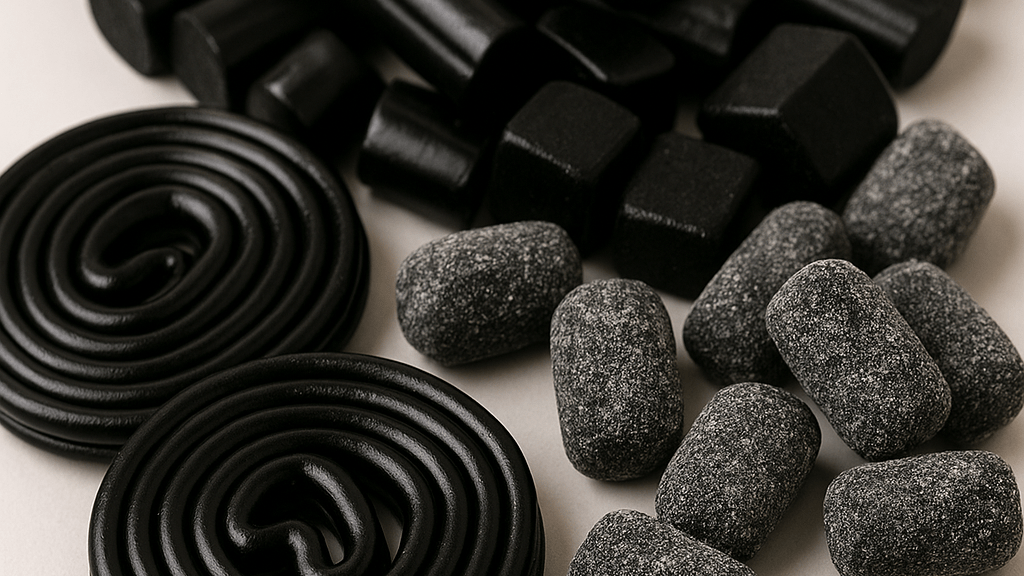
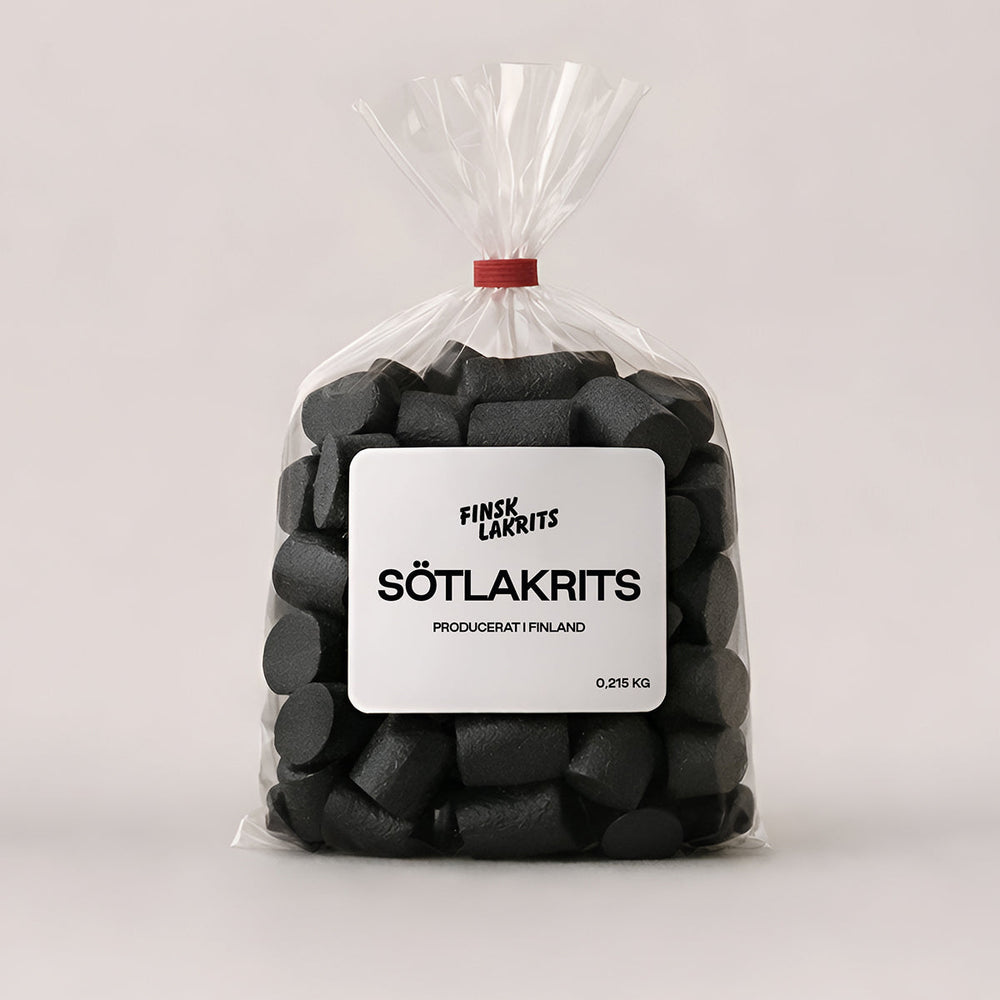
In the context of candy, people often talk about sweet licorice and salty licorice . Sweet licorice refers to the classic licorice flavor based on the natural sweetness of the licorice root (glycyrrhizin) in combination with sugar or syrup [11] Salt liquorice, on the other hand, contains not only licorice but also ammonium chloride – a salt that gives it a distinctly salty, almost licorice -like taste [12] . Ammonia also contributes a slightly cooling sensation on the tongue [13] It is this salt that gives salt liquorice its intense saltiness; liquorice itself is not naturally salty in taste [14] .
In Sweden and the rest of the Nordic countries, the word “licorice” is sometimes used synonymously with salted licorice, since salted licorice candy is so popular here [15] . However, there are chemical differences: glycyrrhizin is a natural sweet substance, while ammonium chloride (NH_4Cl) is an inorganic salt. Combining them gives the unique salty-sweet flavor profile that characterizes Nordic salt liquorice. Many salt liquorice products also contain common salt (sodium chloride) or anise as a flavor enhancer [16] The result is a candy with multiple flavor dimensions – sweet, salty, and spicy at the same time.
The history of licorice as a medicinal plant and candy
Licorice has a long cultural history , both as a medicinal plant and as a flavoring. The earliest known uses date back over 6,000 years – licorice root is mentioned in ancient Assyria around 4000 BC as a healing herb [17] The ancient Egyptians also highly valued licorice: in Egypt around 1500 BC, licorice was used as a medicine, and licorice root was even placed in the tombs of the pharaohs as provisions for the afterlife [17] .
In ancient times, licorice was mentioned by several prominent figures. Hippocrates (5th century BC) praised licorice for its beneficial effects on the stomach, eyes, and throat, and called the root “Scythian root” [18] Alexander the Great had his soldiers carry licorice root with them on their campaigns (360 BC) to help them march longer and to relieve thirst and discomfort [19] The Romans and Hannibal also used licorice on long campaigns (c. 270–185 BC), as the root was considered to provide energy and relieve various ailments [19] . More recently, Napoleon Bonaparte (18th century) is said to have chewed licorice to calm his nerves during battle [20] .
From being used primarily as a natural medicine , licorice gradually began to spread as a pleasure. In Europe, the cultivation and processing of licorice root began as early as the Middle Ages – in the 13th century there is evidence of industrial licorice production in Spain/Italy [21] In England, the town of Pontefract became a center for licorice cultivation; the famous “Pontefract cakes,” early licorice pastilles, were created there in the 18th century [22] The form of licorice candy we know today was invented by accident in 1760 in England : the pharmacist George Dunhill is said to have accidentally mixed licorice extract with flour and sugar, resulting in the first sweet licorice confection [23] .
Licorice came to Sweden early as a medicine. Licorice root was already used in Swedish medicine in the 17th century, especially as a stomach medicine [24] During the late 19th century, the Nordic confectionery industry grew, and liquorice was among the products from the beginning [25] . Well into the 20th century, pure licorice root ( “licorice sticks” ) was sold in Swedish pharmacies – in fact, as late as the 1970s, licorice root could be purchased over the counter as a cough suppressant or mild laxative [26] Today, we primarily know licorice as a popular candy flavor , but its history as a medicinal plant lives on in certain products (e.g., throat lozenges and cough medicines often contain licorice).
Licorice in food and drinks
Beyond the candy shelf, licorice also has a place in food and drink. Licorice root can be brewed into tea – a sweet tea infusion prized in alternative medicine for its calming properties [27] In the Asian health system Ayurveda, licorice tea is believed to balance different energies in the body and be good for the throat and respiratory tract [27] Licorice root is also included in some spice blends ; for example , Chinese five-spice may contain licorice notes, and licorice notes can be detected in some Middle Eastern herbs and liqueurs. [28] .
Speaking of liqueurs – liquorice or similar flavourings are found in a number of classic spirits . Examples include the French pastis , Greek ouzo , Turkish raki and Italian sambuca , as well as Spanish absinthe . These drinks are often flavoured with anise or star anise in combination with liquorice root [5] , which gives the characteristic “licorice flavor” many associate with aperitifs. (Note that anise itself provides a similar flavor profile thanks to the substance anethole, but licorice root contributes sweetness and complexity.) In the Nordic countries, liquorice is also used to flavor spirits and snuff for its sweet, herbaceous flavor.
In modern gastronomy, licorice appears in both desserts and cooking . Chefs can use licorice powder as a spice in everything from ice cream and chocolate pralines to breads and marinades for an unexpected depth of flavor. The combination of chocolate and licorice is especially popular in the Nordic countries – chocolate pralines rolled in licorice powder or licorice dipped in chocolate are popular delicacies. There is even an annual Licorice Festival in Sweden and an official Licorice Day (April 12) to celebrate this versatile flavor.
How much licorice do we eat in Sweden?
Licorice is perhaps especially popular in the Nordic countries . Sweden imports tons of licorice every year; in 1991, for example , 5,390 tons of licorice candy (licorice-flavored candy) were imported to Sweden [29] [30] This corresponds to an annual consumption of approximately 1 kg of liquorice candy per person in Sweden [30] Our neighboring countries eat even more – an estimated 50–150% higher consumption per capita than the rest of the Nordic region [30] This places the Nordic countries among the absolute largest consumers of licorice globally. The Netherlands is also known for its love of licorice, with the world's highest licorice consumption (around 2 kg per person per year ) according to some data [11] .
The fact that licorice is so popular here is evident on the candy shelves – everything from classic licorice sticks and pastilles to modern flavored variants (raspberry licorice, chili licorice, etc.) are selling well. According to the Swedish Board of Agriculture, licorice candy is included in the average Swede’s 15 kg of candy per year , with licorice making up a significant proportion. The taste is polarizing, however – many people love licorice intensely, while others dislike it. But in Sweden, the majority of the population seems to appreciate licorice, especially in the form of salted licorice, which is something of an acquired Nordic taste.
The sensory profile of licorice
From a sensory perspective, licorice is very interesting. The taste experience engages multiple taste receptors and senses simultaneously:
· Sweetness: Licorice gives a strong sweet taste thanks to glycyrrhizin. This sweetness comes more slowly than regular sugar but lasts longer in the mouth [3] The long-lasting sweetness can “coat” the oral cavity and leave an aftertaste that lingers.
· Bitterness and saltiness: Pure licorice extract may have a slight bitterness that comes from saponins and phenols. In salted licorice, a distinct saltiness is added from the ammonium chloride (salt liquorice) [12] The salty taste activates salt receptors and can enhance the experience of sweetness through contrast.
· Aroma and aftertaste: Much of the licorice experience is in the scent. Licorice root and anise contain volatile aroma compounds that give the typical licorice aroma we feel when we smell the candy. The aftertaste of licorice is described as herbal, almost medicinal , and can be experienced as slightly warming or numbing in the throat (especially with strong salty licorice).
· Texture/feel: Licorice candy often has a chewy texture (due to added gelatin or starch), which allows us to chew longer and the flavor to spread. Salicylic acid can give a slight tingling or cooling sensation on the tongue at higher concentrations [13] Some very strong licorice products can also induce a certain numbness or tingling in the mouth, which is part of the sensory experience.
In summary, licorice's flavor profile is complex : intense sweetness combined with aromatic herbal notes, sometimes balanced with saltiness and a slight touch of bitterness. It is precisely this complexity that makes licorice unique in the candy world and why it can be so beloved by some – but perhaps too overpowering for others.
Health effects and overconsumption of licorice
Licorice isn't just a candy – it's also been extensively studied for its health effects (both positive and negative). Here are a few:
Traditional Uses and Possible Health Benefits
Historically, licorice has been used as a natural medicine for a variety of ailments. Thanks to its anti-inflammatory and expectorant properties, licorice root has been used for coughs and sore throats for thousands of years [1] [27] Licorice is said to be able to relieve stomach problems – for example, Hippocrates mentioned its beneficial effect on the stomach [18] , and even today licorice is included in some natural remedies for gastritis and heartburn . Research has indicated that licorice root may have anti-inflammatory and antiviral effects ; it contains substances that have been shown in laboratory studies to inhibit the growth of certain viruses, bacteria, and fungi [27] There are also studies suggesting that glycyrrhizin may have hepatoprotective and hepatoprotective effects , be used in the treatment of hepatitis C , and potentially have cancer-preventive properties in animal models [31] For example, substances from licorice have been shown to induce apoptosis (programmed cell death) in prostate cancer cells in laboratory experiments [32] [33] .
It should be remembered, however, that many of these health benefits have been observed in controlled studies or historical anecdotes. The amount of licorice consumed in candy form is rarely sufficient (or properly prepared) to have medicinal effects. Nevertheless, the properties of licorice root are exploited in some modern medicine : the sweet taste of glycyrrhizin helps to mask the bitter taste of medicines [34] (e.g. in cough syrups and throat lozenges), and pure licorice is still used in alternative medicine supplements. For the layman, licorice in small amounts can provide relief for a dry throat or a cough , but it is not a miracle cure for serious conditions.
Risks of overconsumption – licorice poisoning
Despite its cozy associations, licorice can be harmful if consumed excessively . The reason is again glycyrrhizic acid. In the body, glycyrrhizin can affect hormone balance: it inhibits the enzyme 11β-HSD2 , which normally breaks down cortisol into inactive cortisone [35] The result is elevated levels of active cortisol that binds to aldosterone receptors – in practice, a condition similar to overproduction of aldosterone (so-called pseudohyperaldosteronism) arises [36] This leads to disturbances in salt and fluid balance.
Symptoms of licorice overconsumption may include:
· High blood pressure (hypertension) – due to increased sodium and fluid retention [37] [38] .
· Edema (swelling) – fluid accumulation in the body, e.g. swollen ankles [39] .
· Hypokalemia (potassium deficiency) – licorice causes the body to excrete potassium, which can cause muscle cramps, weakness, and fatigue [35] [40] .
· Arrhythmia and heart problems – severe potassium deficiency can trigger irregular heart rhythms and in extreme cases cardiac arrest [41] .
· Headache and weight gain – have also been reported in susceptible individuals [39] .
The Swedish Food Agency warns that regularly eating more than 50 grams of liquorice candy per day may pose a risk to susceptible individuals [42] This amount (50 g) corresponds to approximately 100 mg of glycyrrhizic acid per day [42] To be on the safe side, some experts recommend not exceeding about 5 g of licorice per day on average (i.e. one-tenth of the risk level) [43] The EU has discussed guidelines around a maximum of 100 mg of glycyrrhizin per day for consumers [44] In the Nordic countries, the average intake is well below this – an estimated 6–15 mg of glycyrrhizin per person per day on average [45] – but some individuals (licorice lovers) can easily exceed the recommendations.
It is worth noting that sensitivity to licorice varies . Some people can eat quite a lot without any noticeable effect, while others experience a rise in blood pressure from small amounts. Several case reports have been noted: in Sweden, about ten people are affected by licorice poisoning each year and require medical care [46]. In 2020, there was even a fatality in the US where a person died after eating large amounts of licorice daily for a couple of weeks [47] Such extreme cases are rare, but they highlight that licorice is not completely harmless . People with cardiovascular disease, high blood pressure, kidney problems, or pregnant women should be especially careful. [48] [49] For children, the Swedish Food Agency recommends that young children (under 5 years of age) should not regularly eat liquorice or salmiak, as their lower body weight makes them more sensitive [42] .
Summary
Licorice is a fascinating flavor with deep roots in history and in our taste buds. Its unique character comes from the sweet, sharp note of glycyrrhizic acid, which is often accompanied by the spice of anise. Sweet licorice and salt licorice illustrate how the same basic flavor can be varied – from mildly sweet to salty-pungent – and have become part of Nordic food tradition. We in Sweden are among the world's largest consumers of licorice, and for many, licorice is more than candy: it is part of our culture, from the liquorice root in the pharmacy to the candy bag at Friday night.
At the same time, licorice’s dual nature reminds us that moderation is key . In small doses, licorice can bring joy and perhaps even relief to the throat, but in large quantities it can upset the body’s balance. So the next time you enjoy a piece of licorice—whether sweet or salty—you can impress those around you with the knowledge of the sweetness of glycyrrhizin, the history behind the flavor, and why moderation is actually best when it comes to licorice. [37] [42] .
[1] [2] [3] [5] [7] [8] [9] [10] [17] [19] [20] [21] [23] [25] [27] [31] Licorice - candy and medicine | Strömsö | Swedish Yle
[4] [6] [14] [28] What Flavor Is Black Licorice, Anyway?
https://www.chowhound.com/1739764/what-flavor-is-black-licorice-explained/
[12] [13] [15] [16] [18] [22] [24] [34] Licorice - Salmiak, Facts
https://baggusevents-stockholm.se/lar-dig-mer-om-livets-goda/lakrits.html
[29] [30] [35] [46] [47] Licorice - Wikipedia
https://sv.wikipedia.org/wiki/Licorice
[32] [33] [36] [43] Licorice – USEFUL
https://www.nyttigt.se/nytt/lakrits/
[37] [39] [42] [45] [48] Glycyrrhizic acid in licorice
https://www.livsmedelsverket.se/livsmedel-och-innehall/oonskade-amnen/vaxtgifter/glycyrrhizinsyra/
[38] [40] [41] [49] Eat licorice in moderation this Easter! - The Swedish Kidney Association
https://njurforbundet.se/at-mattligt-med-lakrits-i-pask/
[44] Consider liquorice | Food | The Guardian
https://www.theguardian.com/lifeandstyle/wordofmouth/2010/may/25/consider-liquorice

Leave a comment
This site is protected by hCaptcha and the hCaptcha Privacy Policy and Terms of Service apply.